A Pocket History of Reading

Most of the photographs on this website were taken in and around Reading in Berkshire.

This post explores the history of Reading, as the region offers a considerable amount of visual diversity.

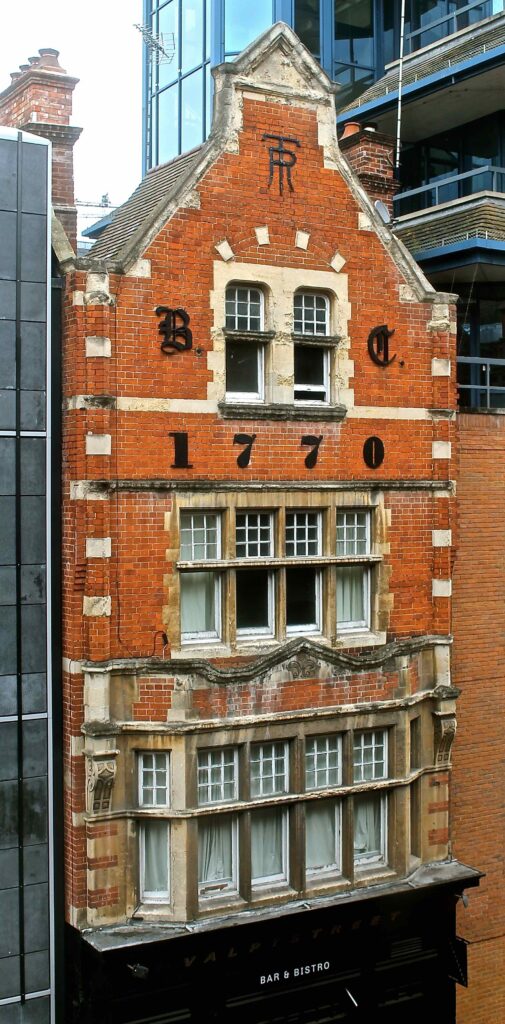
Areas like Pell Street show the strength of localisation in the architecture of the 18th and 19th Centuries, when brick making was at its most prolific in the area.  So many construction materials were made here that Thomas Hardy referred to Reading as ‘Auld Brickham’.

Clay was dredged from the river Kennet valley and made into tiling and bricks, hence the suburb called ‘Tilehurst’.  It is not difficult to imagine the bright coloured architecture of Pell Street, with red, yellow and black bricks shining, when it was first built in the reign of Queen Victoria.

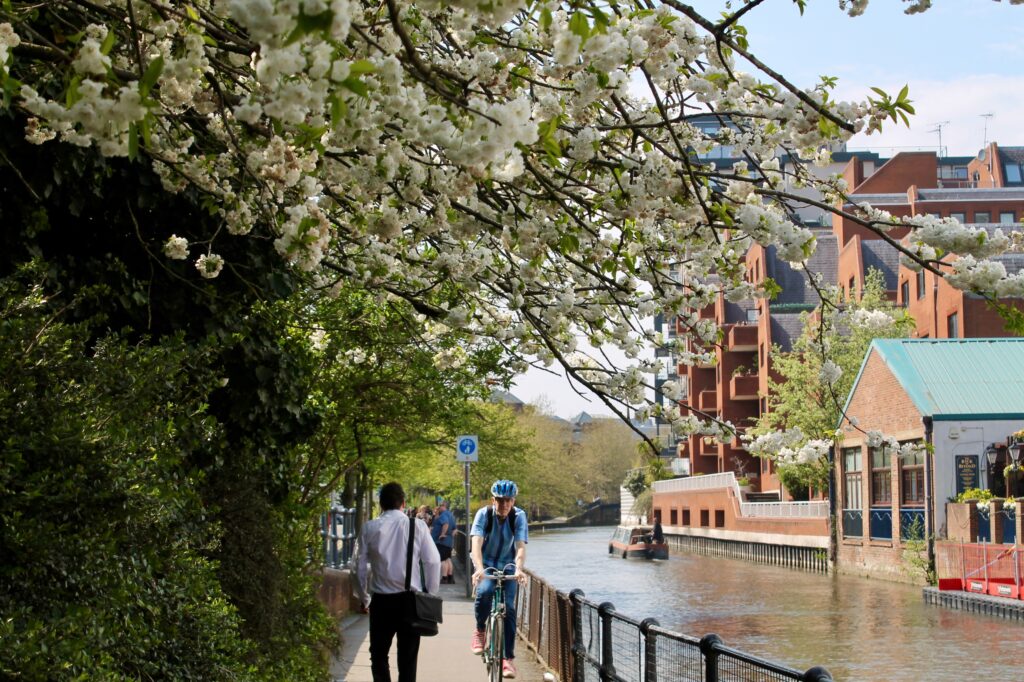
Reading Canal

Reading Canal

The settlement starts to grow from 650AD when the Benedictine monk, St Birinus, arrived to convert Anglo Saxons to Christianity.  However, the confluence of the River Thames and Kennet river likely supported people as far back as the Stone Age.  Relics from this time can be found in the Museum of Reading.


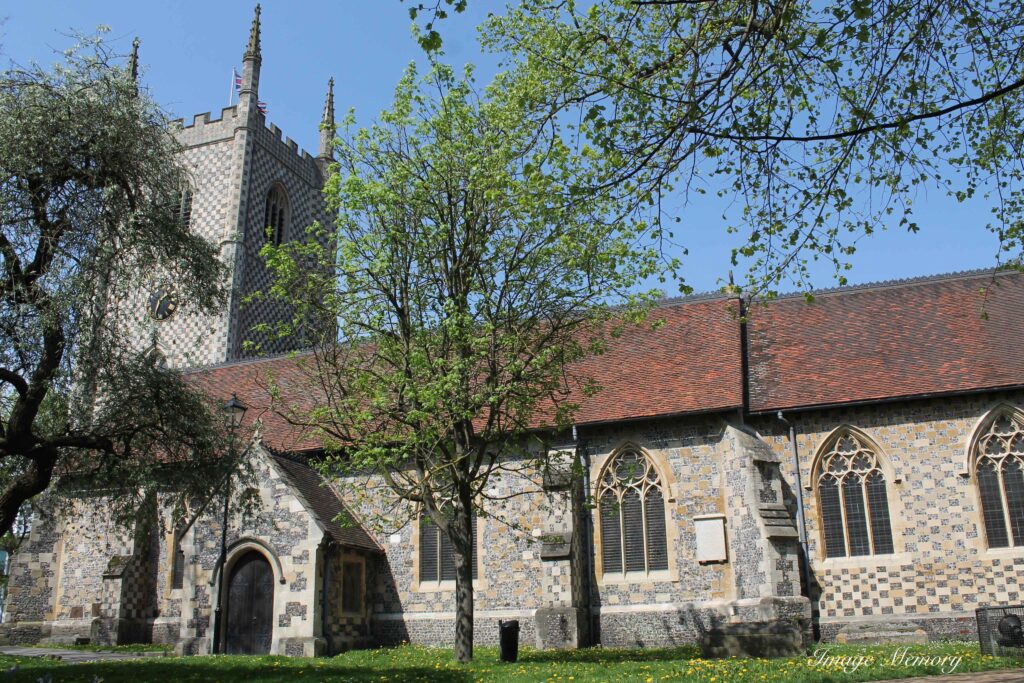
Having been made a Bishop in Genoa, St Birinus was sent to the UK to spread the good news of Jesus.  Arriving in Southampton and spreading his ministry, he ultimately became the first Bishop of Dorchester and was known as the ‘Apostle to the West Saxons’, for his conversion work in the Kingdom of Wessex.  St Birinus founded a site for Christian worship in the centre of Reading.  Reading Minster now occupies this spot (see below).

Reading Minster

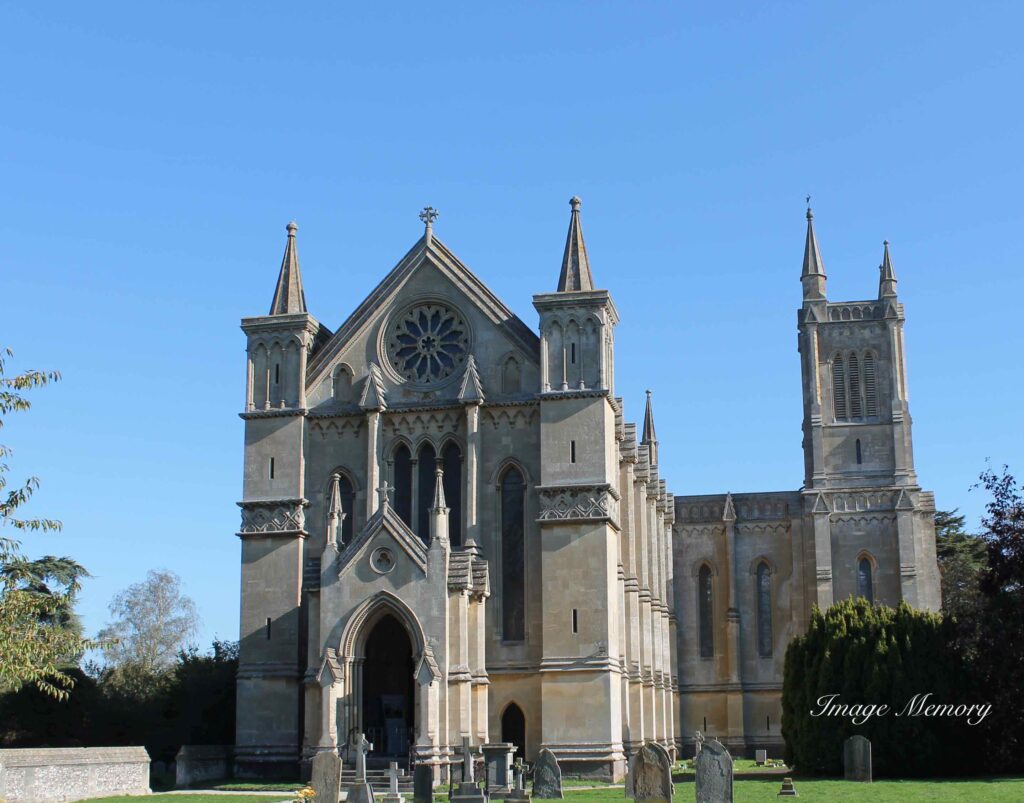
Theale, a small village just west of Reading, has an imposing church called Holy Trinity (see below). Modelled upon Salisbury Cathedral, with the dimensions measured to a third.  Here, there is the recently built St Birinus House, a purpose built administrative office for the Bishop of Oxford.  The mainly timber building was completed in December 2021.  Its title testifies to the Benedictine monk’s success.

The river Kennet was ‘canalised’ in 1723, the engineer for this conversion was John Rennie.

This was an important time for the region, as it added Bristol to the existing links with Oxford, 25 miles to the South, London 40 miles to the East and Swindon 40 miles to the West.

Although narrow boats containing goods for London, passing through Reading, often got projectiles thrown at them as they offered new competition for the London market.

In addition to bricks, Reading was also renowned for tasty Huntley and Palmers biscuits.

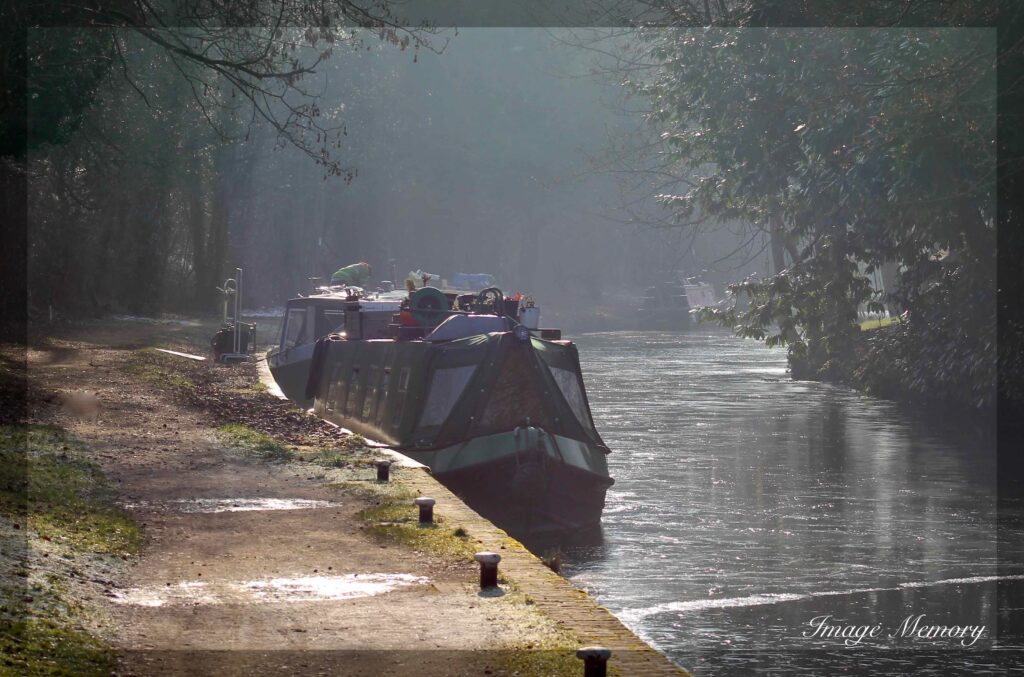
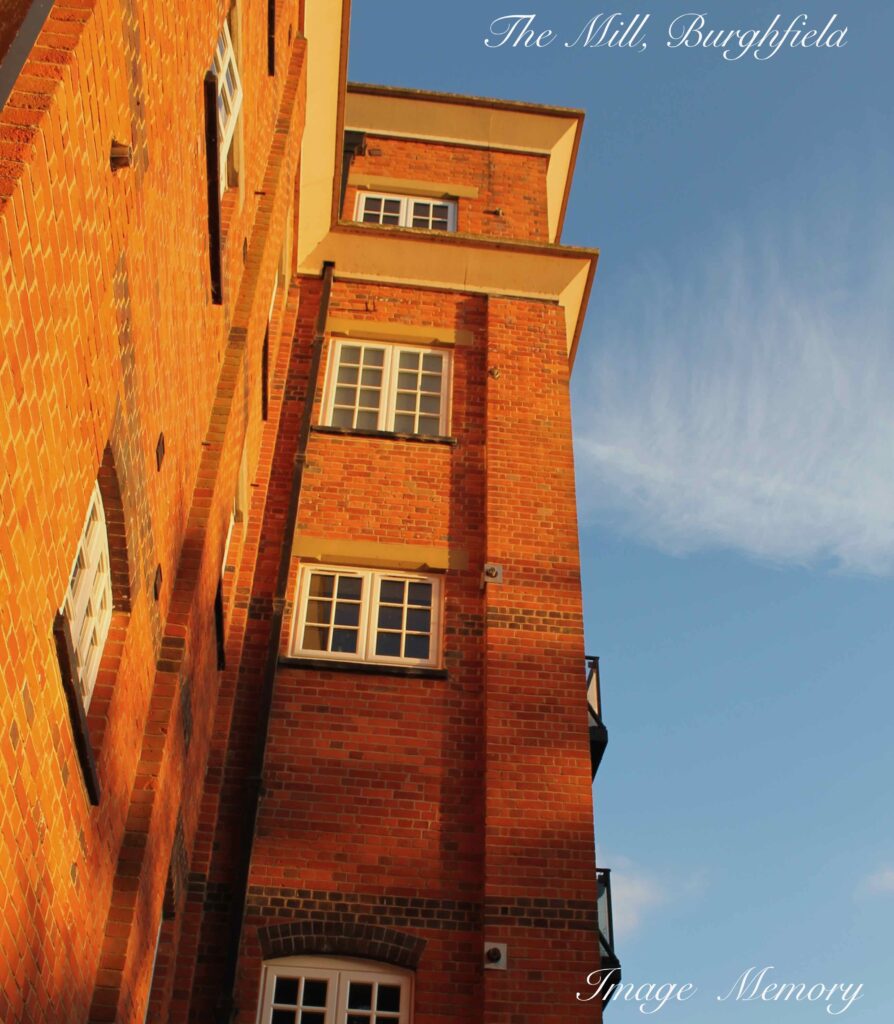
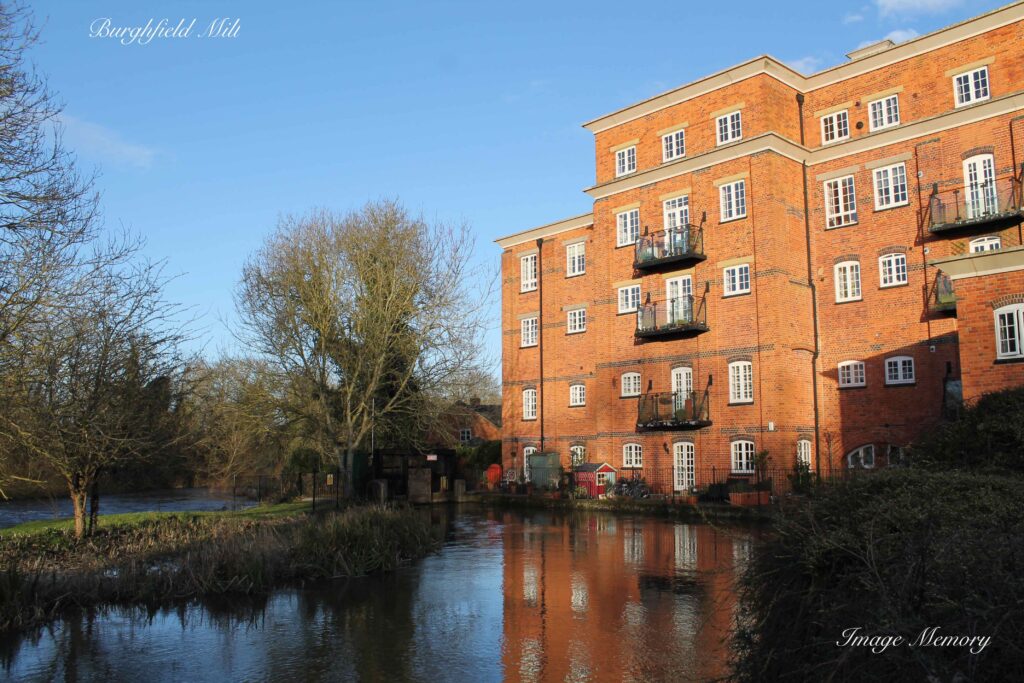
Burghfield Mill

Burghfield Mill

The canal linked chocolate milling at Burghfield Mill (see above and below) to Huntley and Palmers production unit in the centre of Reading. Biscuit production was so big, the biscuits were eaten as far away as the Far East.  Huntley and Palmers (please click on previous text for full history) biscuit manufacturing was enjoyed between 1822 and 1972.  The Huntley and Palmers factory was demolished in 1978.  Although, Burghfield Mill was converted into apartments in 1986 and the old Factory Social Club still exists and has been converted into flats.

Burghfield Mill Apartments

Burghfield Mill Apartments

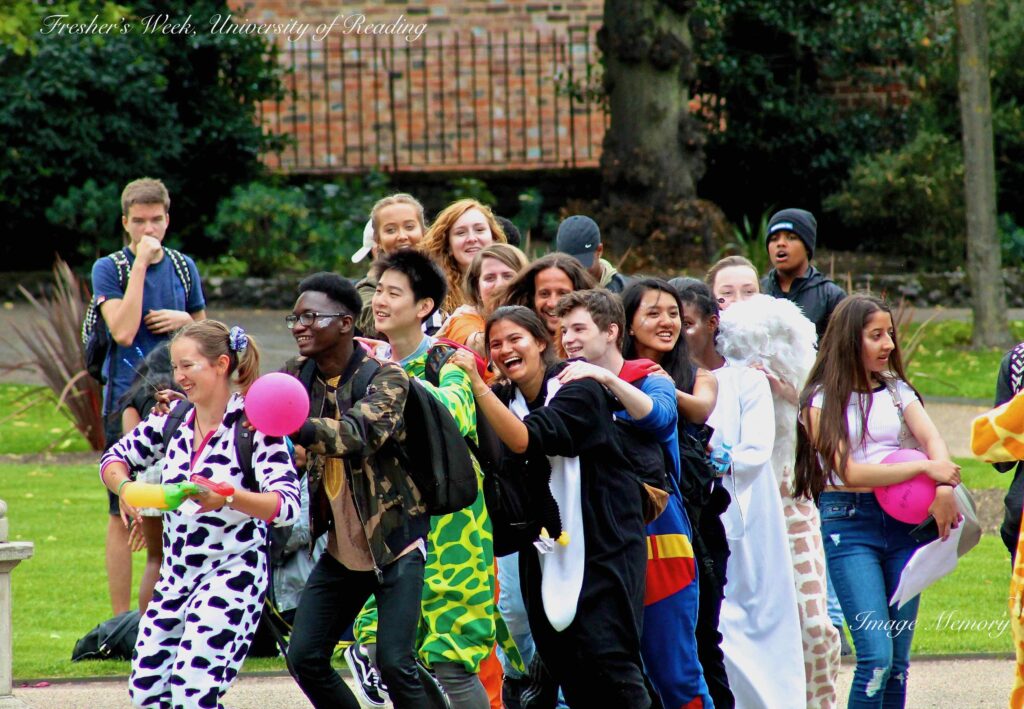
Reading today has a population of 173,170 and enjoys a multicultural lifestyle.  Oxford Road includes a mosque, and the University of Reading has more than 17,000 students.

Reading University Student

Reading University Student

The Psychology of the Colour Pink: Meaning, Symbolism and Wellbeing

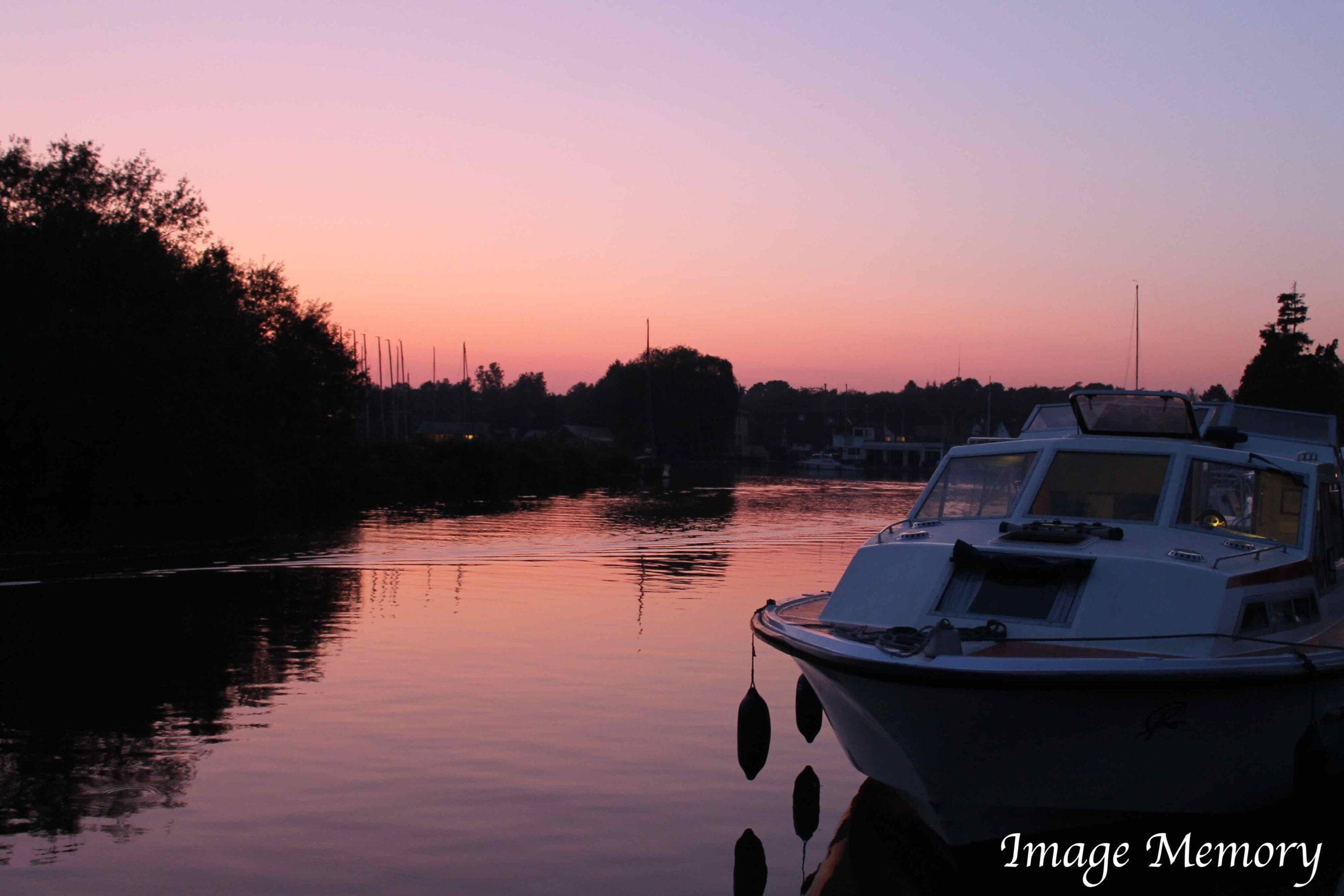
Pink Sky Reflection, The Norfolk Broads, Art Photograph, Hugo Richardson

Pink is a colour with a surprisingly deep and varied history. From ancient literature to global cultures, from religious symbolism to modern marketing, pink has carried meanings of love, innocence, power, luxury and even rebellion. This post explores the fascinating story of pink and the emotional impact it continues to have today.

Pink in Early Literature

In the 8th century BC, Homer’s Odyssey references pink as the rosy colour of dawn, “Then, when the child of morning, rosy-fingered dawn appeared…”
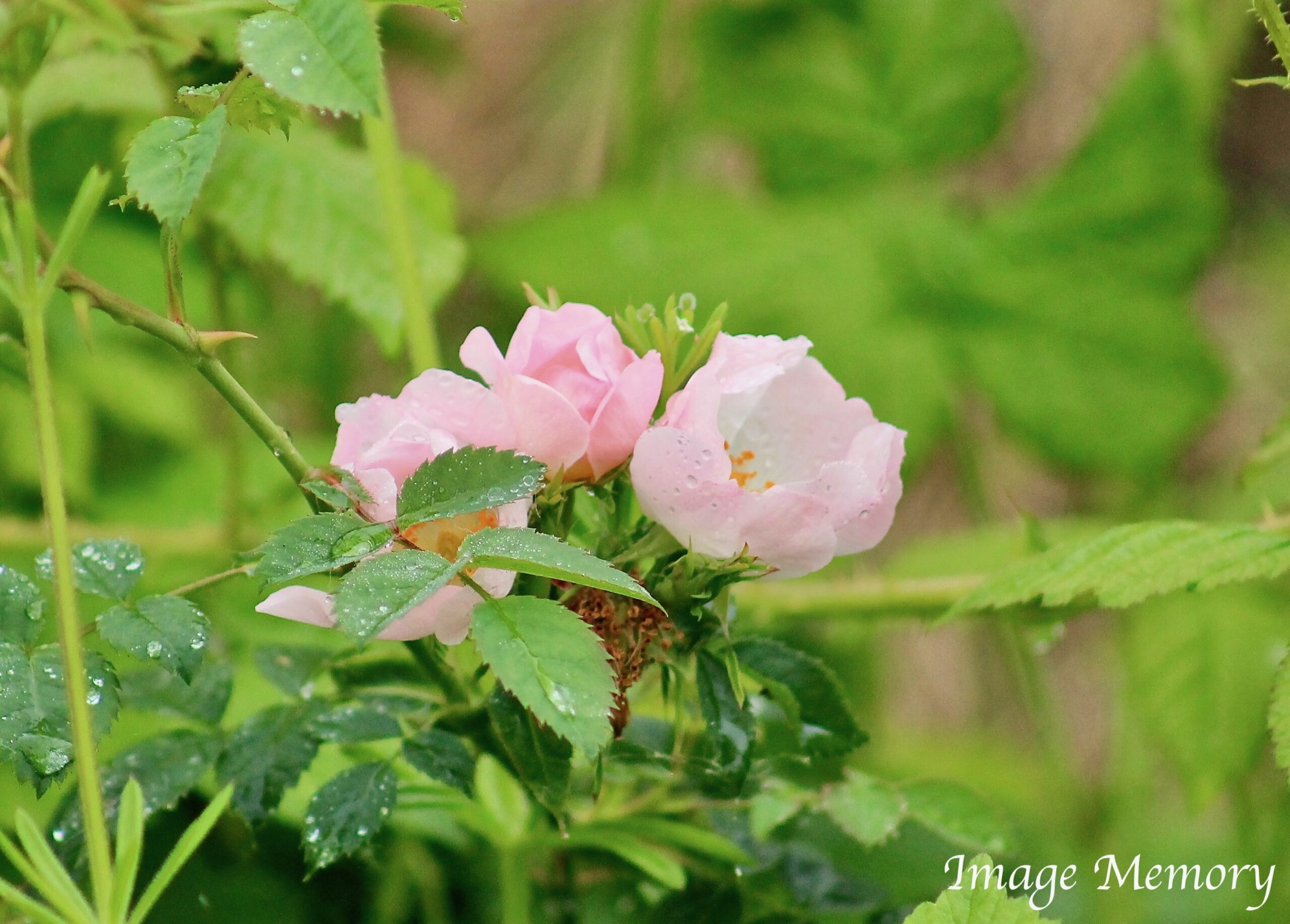
Wild Rose with Rain Drops, Art Photograph, Hugo Richardson

Suffolk Pink: A Colour With History

Suffolk Pink, seen on many historic buildings in the region, dates back to the 14th century. The colour was traditionally created by adding elderberries to limewash, though sloe berries, blackthorn and even ox blood were also used. These additions were believed to strengthen the protective qualities of the limewash.

The ‘Suffolk Pink’ colour is highly protected and regulated by local councils and English Heritage.  Marco Pierre White once painted The Angel in Lavenham a shade of ‘blancmange’ in 2013 that offended the locals and the council.  He was forced to repaint, only after the right shade of pink was agreed with English Heritage.

Pink in Religion and Symbolism

Biblically, pink is associated with being in right relationship with God. It symbolises the “Love of God,” combining the red of Christ’s blood with the purity of white. In some artworks, Jesus is shown wearing pink to evoke innocence and the womb.

Pink symbolises friendship, beauty, faithfulness, compassion, romance, love and sensitivity. Pink roses, for example, represent admiration, happiness and familial love.

How Pink Pigments Were Made

Light red eventually evolved into the colour term “pink.” Historically, pink pigments were produced by mixing alum and chrome mordant with brazilwood dye or with madder roots plant Rubia tinctorum.

Mixed with white, pink can also be made using red from the cochineal insect. Cochineal was cultivated commercially in Poland, Prussia, Saxony, Lithuania and the Ukraine in the 18th century.

The cochineal harvest started on the fifth hour (between eleven o’clock and noon) of St John the Baptist’s feast day on the 24th June, accompanied by religious ceremonies.  Some stories are hidden deep in language, in words we use daily, but the origins of which have been long forgotten.

Polish cochineal is also known as Polish lac and the cochineal insect is known in Polish as Czerw.  The female of the cochineal, in the late larva state, was collected and boiled in water with vinegar. They were then dried in the sun, or in ovens and ground with bread acid to produce a dye.

But as many as 155 thousand insects were required for 1kg of dye, pushing red textile prices through the roof.  Polish noblemen, monarchs and high clergy were the only people that could afford cloth dyed with cochineal, also known as Saint John’s blood.

The first flags and banners of the Kingdom of Poland show a white-crowned eagle on a red background, and the white and red flag represents Poland to this day.

From the 16th Century, Polish cochineal was predominantly replaced by cochineals from the New World.

Pink symbolises friendship, beauty, faithfulness, compassion, romance, love and sensitivity.

Pink roses, for example, symbolise love between family members, admiration and happiness.
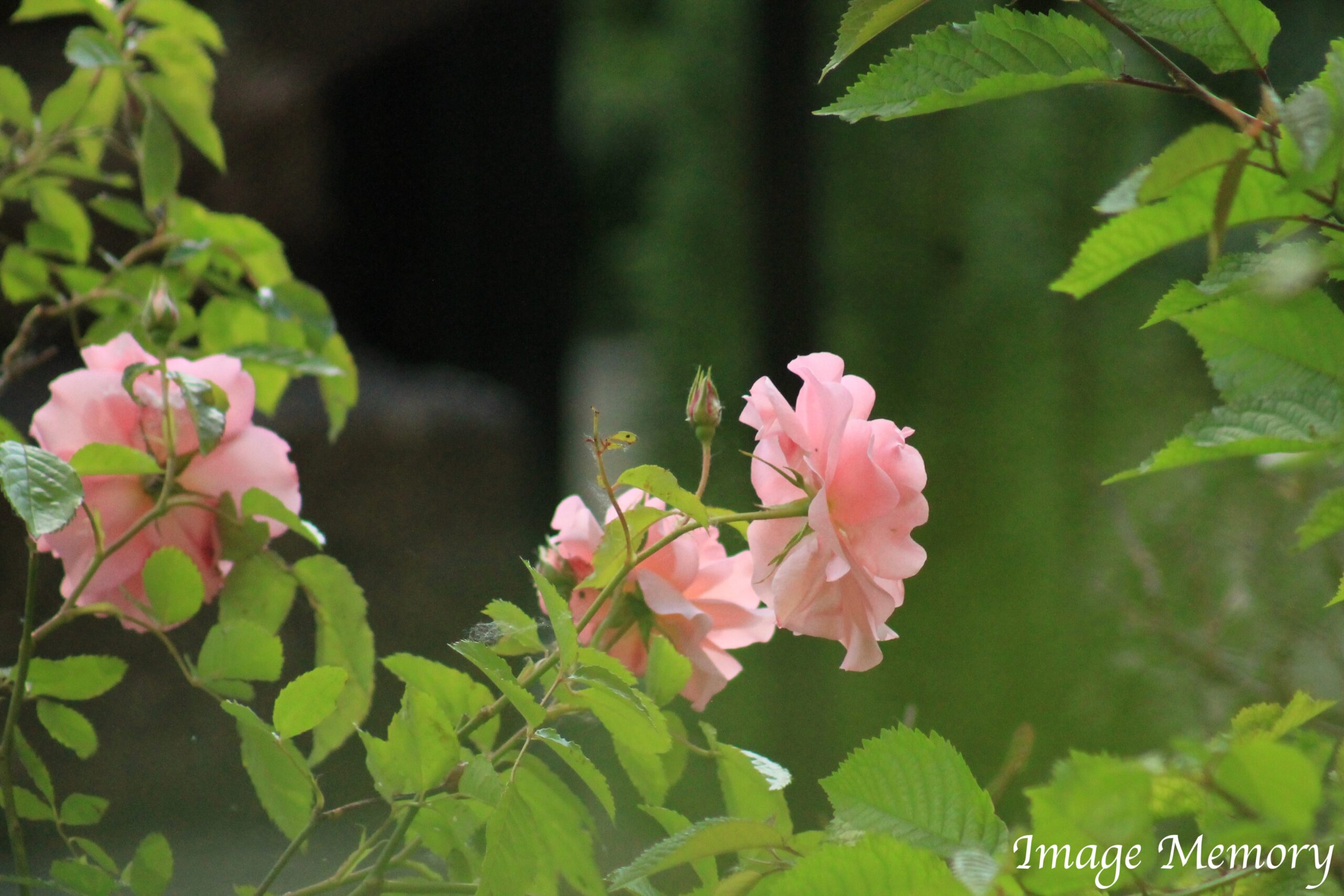
Pink Roses, Art Photograph, Hugo Richardson

Pink in Global Cultures

Pink carries different meanings around the world:

In Japan, the colour pink has a masculine association. The Sakura pink cherry trees that blossom in spring represent young warriors (Samurai) who fell in battle in the prime of their life.

Pink is a sign of trust in Korea.

In Latin America, it’s symbolic to architecture.

In India, Jaipur City is a tourist attraction.  It has forts, palaces, temples and bazaars which are predominantly pink.  The geography is often called ‘The Pink City’.

Pink in the Sky and Natural Light

Clouds often appear pink at certain times of day. This happens because sunlight scattered by clouds is also scattered by air molecules. Shorter?wavelength colours such as green and blue are scattered out of our direct line of sight more than red. The atmosphere preferentially scatters blue light toward us — a phenomenon known as airlight.

Airlight is responsible for the blue sky and contributes to the blue appearance of distant mountains, such as the Blue Mountains in Australia.  Because airlight is polarised, its intensity changes depending on the setting of a camera’s polarising filter. When reddened sunlight and scattered blue light combine, the result is the soft pink glow we often see in clouds.

It is responsible for the blue sky and partly for the blue colour of distant mountains  Airlight is polarised and so the intensity depends on the setting of the camera polarising filter.  The reddened light and blue light together produce the pink.
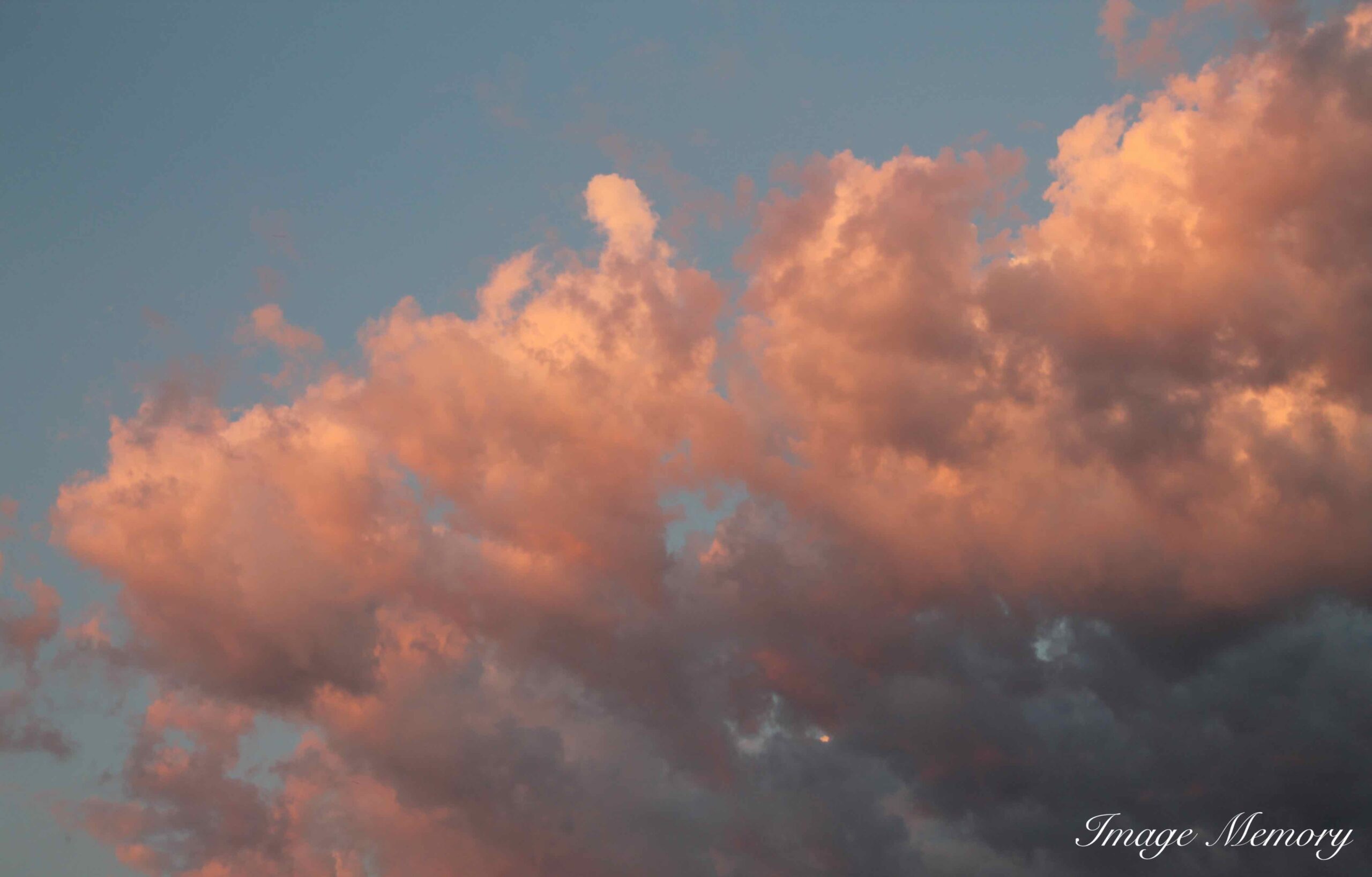
Pink Clouds, Art Photograph, Hugo Richardson

Pink in Maps and Empire

Traditionally, territories of the British Empire were coloured pink on maps. This was a practical compromise: red was the colour associated with the Empire, but printing colonies in red made place names difficult to read on globes and atlases. Pink provided a clearer, more legible alternative.

Pink as a Symbol of Luxury

In the West, Pink first became fashionable when European aristocrats, both men and women, wore a faint pink powdery variance as a symbol of luxury and class.

Pink in the Natural World

In the natural world, one of the most dramatic colours of pink can be found on the flamingo.  Their colour is as a result of the food that they eat which is mainly algae and brine shrimp.  The body of the flamingo metabolises the pigments which turn its feathers pink.
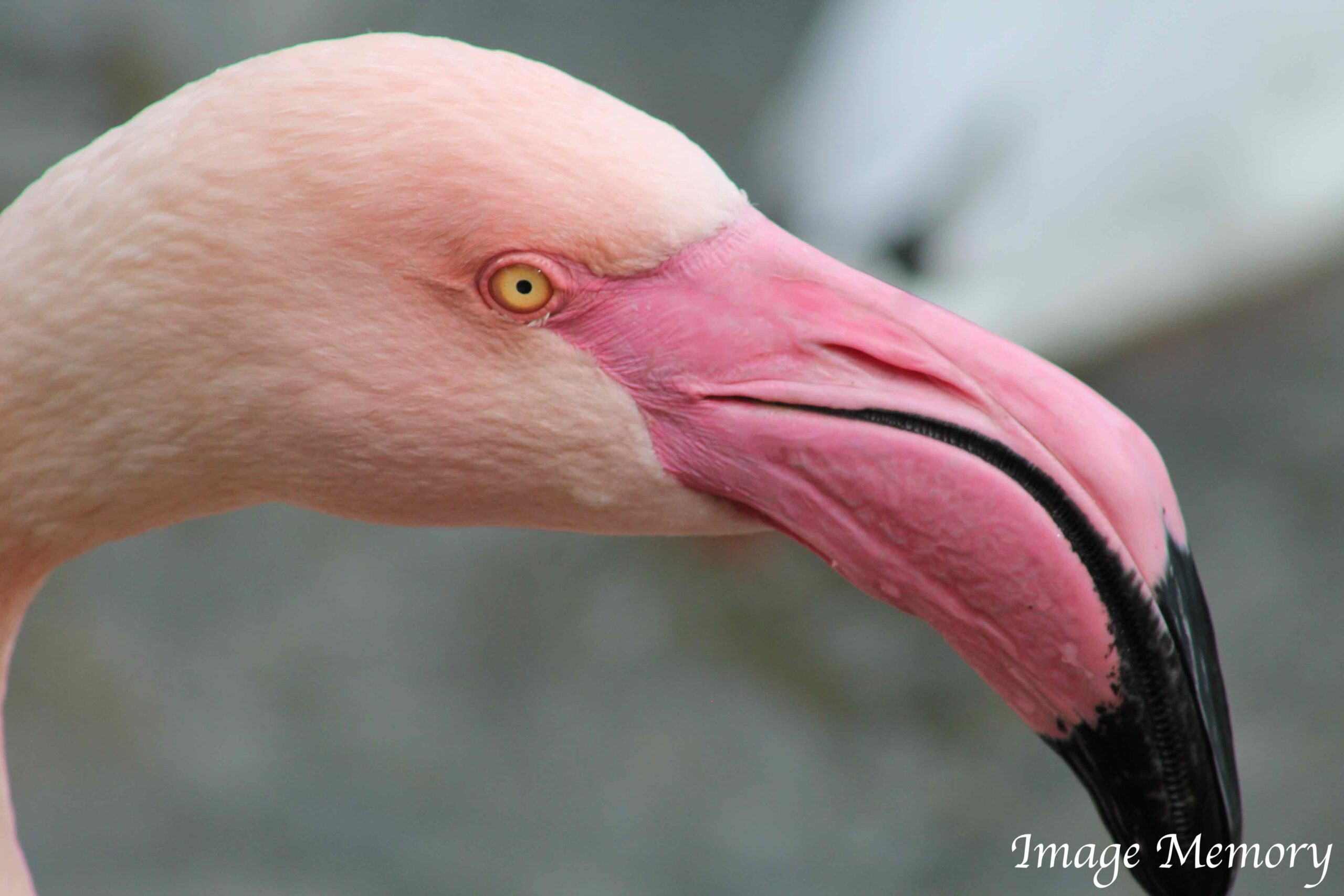
Flamingo, Art Image, Hugo Richardson

Pink in Psychology and Behaviour

In 1979 in the US, penitentiaries were painted pink as an experiment to reduce violence.  This type of pink is called ‘Baker-Miller’. The reason being that the experiment on the first correctional institution was directed by Baker and Miller.

The early research was found to be flawed.  While pink’s calming effect has been demonstrated, researchers of colour psychology have found the effect only occurs during the initial exposure to the colour.  When used in prison, the inmates often become even more agitated once they become accustomed to the colour.

Pink, Gender and Marketing

In the Western world today, pink is widely seen as feminine — .  Barbie pink for girls, blue for boys. But historically, this was not the case. Until the early 20th century, pink was considered a masculine colour, while blue was associated with femininity and the Virgin Mary.

This shifted in the 1940s when retailers realised they could increase sales by marketing colours to specific genders. By the 1950s, everything from toys to toothbrushes was colour?coded, cementing pink as “for girls” in popular culture.

The Rise of Rosé Wine

A very interesting marketing phenomenon has been the massive increase in the consumption of rose wine.  There are a number of reasons for this, some of which include the colour.

The ‘salmon’ shade of Rosé wine is generally the leader globally.  However, an apricot shade of rose wine is preferred by consumers in the Bordeaux region.

Global consumption of rose wine has increased by 30% in 15 years. In 2013 alone, the United States consumed 279.4 million litres (nearly 74 million gallons) of pink wine.

The increase of rose consumption appears to be based upon the attractively of its colour. Rosé is very popular with the millennial generation.  The pink is perfect for Instagram posts and influencers like Angelina Jolie and Brad Pitt, who own the award-winning producing Chateau Miraval has also helped.

Here are all the reasons, following some research on the web:

  • Rosé production quality has increased
  • Rosé has a lower propensity for producing a hangover compared to other wines
  • More and more women are looking for lightness and freshness
  • Rosé is being promoted by celebrities
  • It looks good on social media
  • There is a wide range of sweet to dry options
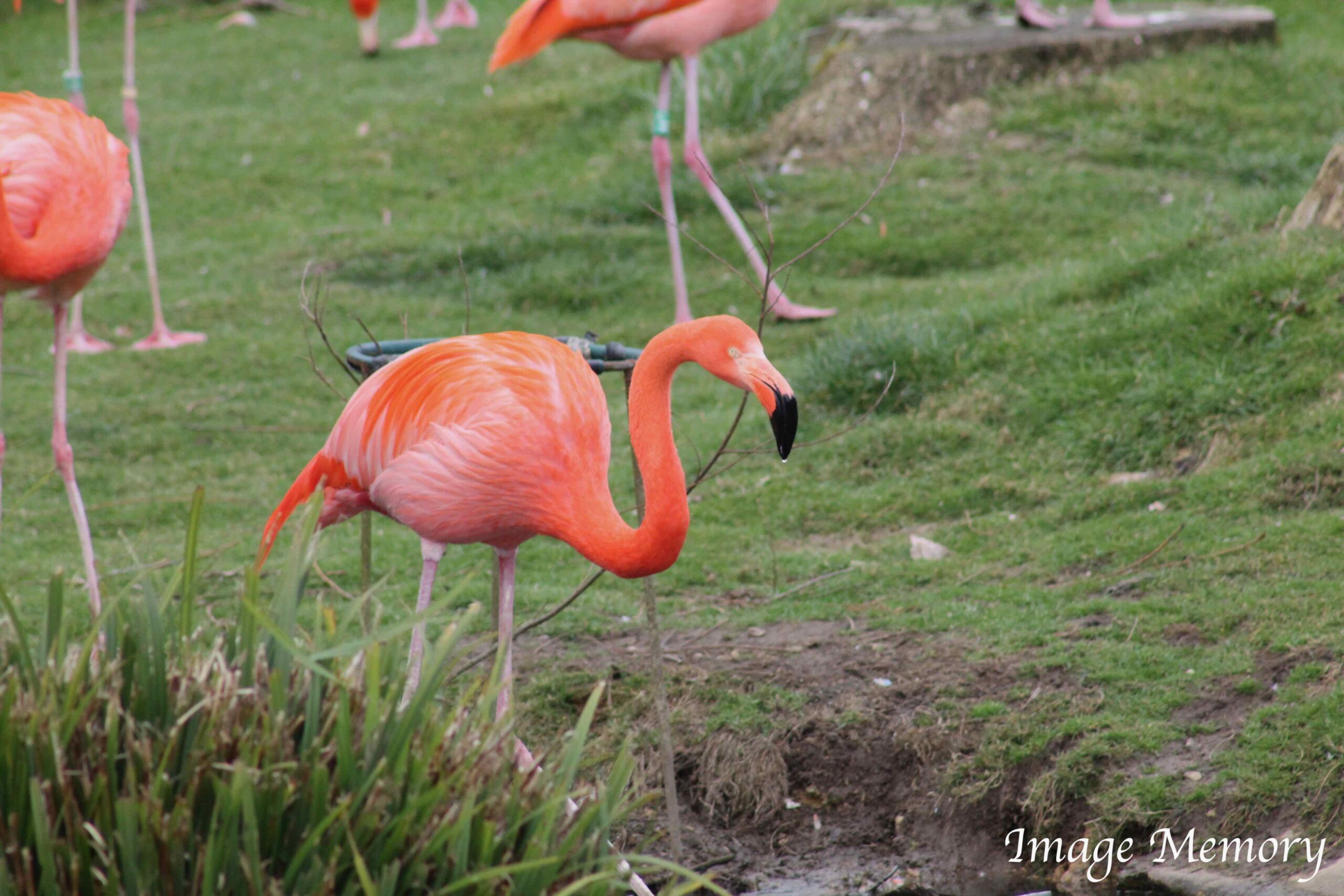
Flamingos, Art Image, Hugo Richardson

Please feel free to communicate with me about the ‘blogs’ we publish.

Email: hugo.richardson@image-memory.com

Tel.:     07476 343 777
The Psychology of Colour – Red / Vermilion

Summer

Red exudes warmth and, like no other colour, radiates a strong and powerful energy that motivates us to take action.  It is used effectively as a warning colour on road signs and as the ‘stop’ light for traffic lights. Red lights also show car users when the driver in front is braking.

In medieval times, artists would use a mixture of sulphur and mercury, heated to very high temperatures, to produce red pigment.  Known as vermilion, red was also produced from cinnabar.

Cinnabar ore contains mercury.  The ore is toxic. Many miners lost their lives whilst mining the mineral as, when it is ingested, inhaled or comes in contact with the skin, it can lead to mercury poisoning.  This toxicity can lead to neurological damage, kidney problems and respiratory issues.

From the end of the 19th century a less harmful alternative to cinnabar was found, cadmium.  Today vermillion is made from modern, harmless and stable pigments.

Love

Associations with the colour red include physical energy, passion, attention, stimulation and excitement.

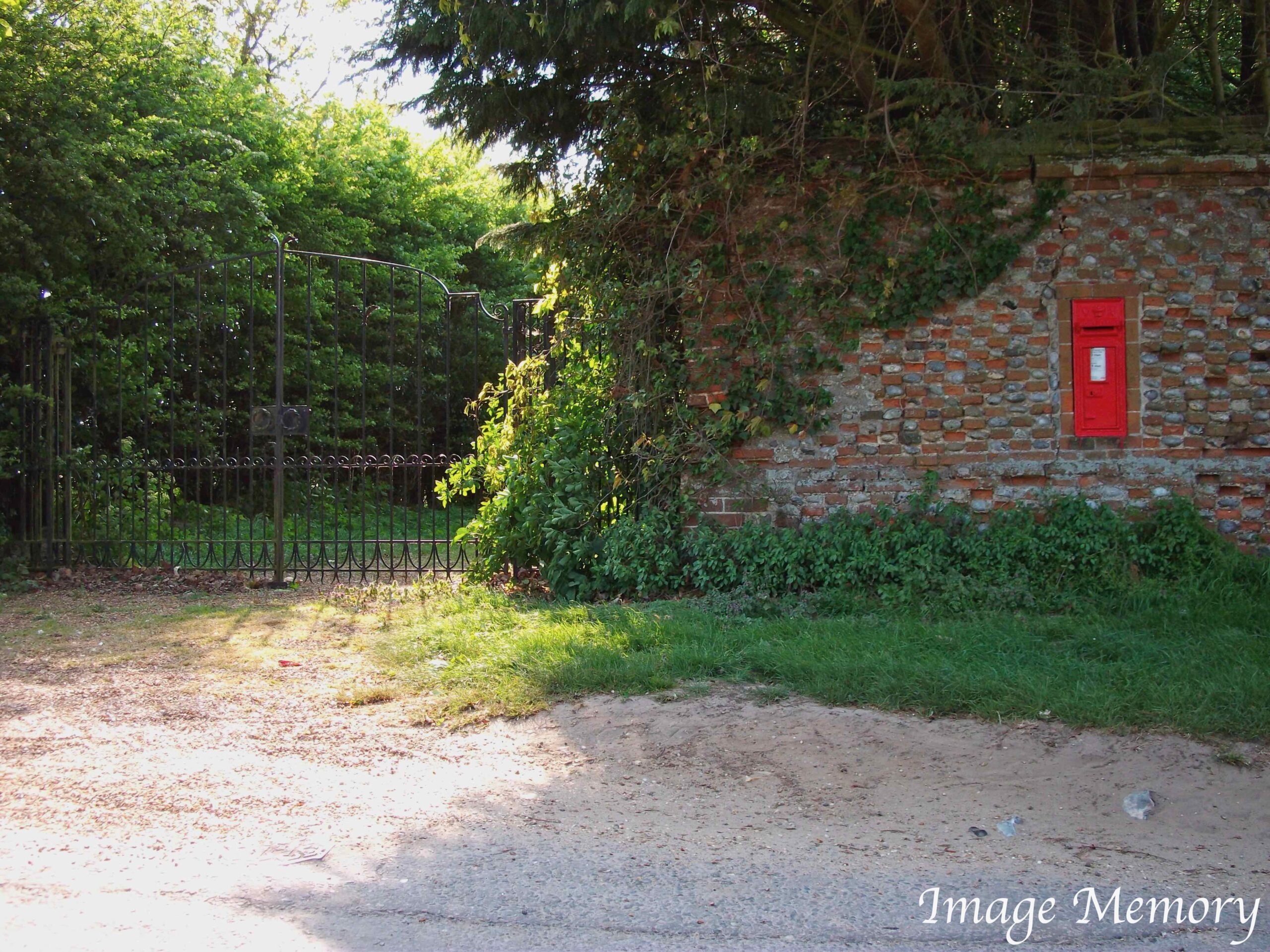
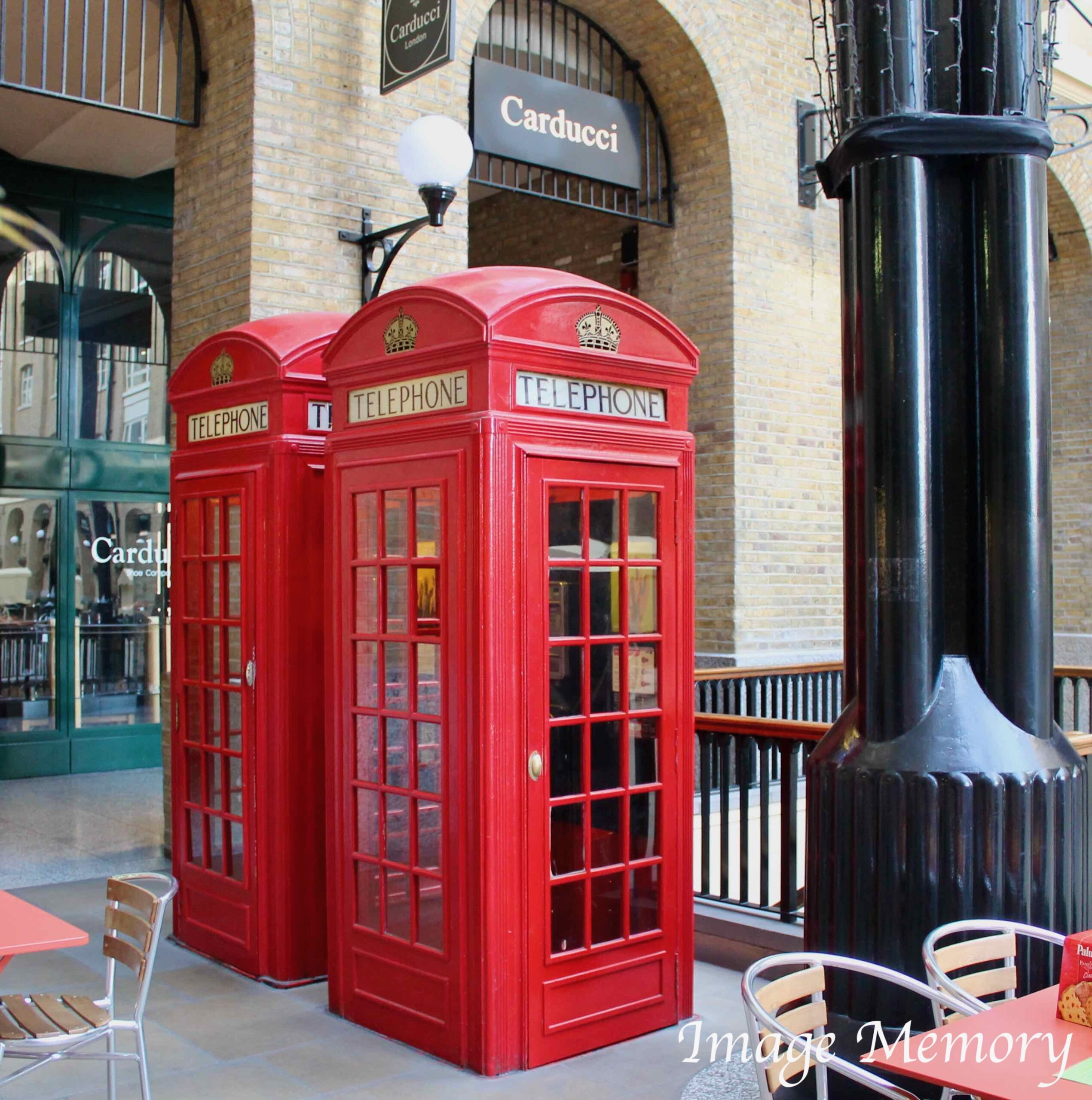
In the UK, pillar boxes are painted red and the original telephone booths were coloured red.

Red is also the colour of blood and has historical connotations with sacrifice, danger and courage.

In Roman times, on the battlefield, Roman soldiers wore a red tunic under their armour to represent blood and strength.  The compact line of the Roman infantry, dressed in red, had a psychological impact on the enemy, which perceived it as strong and valiant.

It is also the colour of war, Mars.  Roman soldiers and gladiators were both adorned in red.

In some accounts, Caesar’s face was painted red.  This was perhaps as an imitation of Rome’s highest and most powerful god, Jupiter.

China also has a love of the colour red.  Throughout the Ming dynasty (1368-1644) red was used as a signal of strength and power. The dynasty was founded in the south and the ruling family’s name, Zhu, means vermillion.

Red is the luckiest colour in Chinese culture.  It symbolises joy, vitality, celebration, success and good fortune.  It is used for weddings and for the Chinese New Year.

The colour red also has a capacity for arousal.  Red stimulates the physical and adrenalin.  It raises blood pressure, the heart and respiration.  The colour also evokes strong emotions and is considered intense and even angry.

Red is believed to sensitise the taste buds and sense of smell, thereby increasing appetite.  All this occurs because the heart rate instinctively quickens, which causes the release of adrenalin in the blood stream raising blood pressure and stimulating the nerves.

The colour red, in Hindu scriptures, activates the circulation system and benefits the five senses.   It is used to treat colds, paralysis, anaemia, ailments of the blood stream and lungs.

Goldstein asserts “under the influence of red light, time is likely to be overestimated”.

From a ‘brand’ perspective, it is easy to recall when red is used.

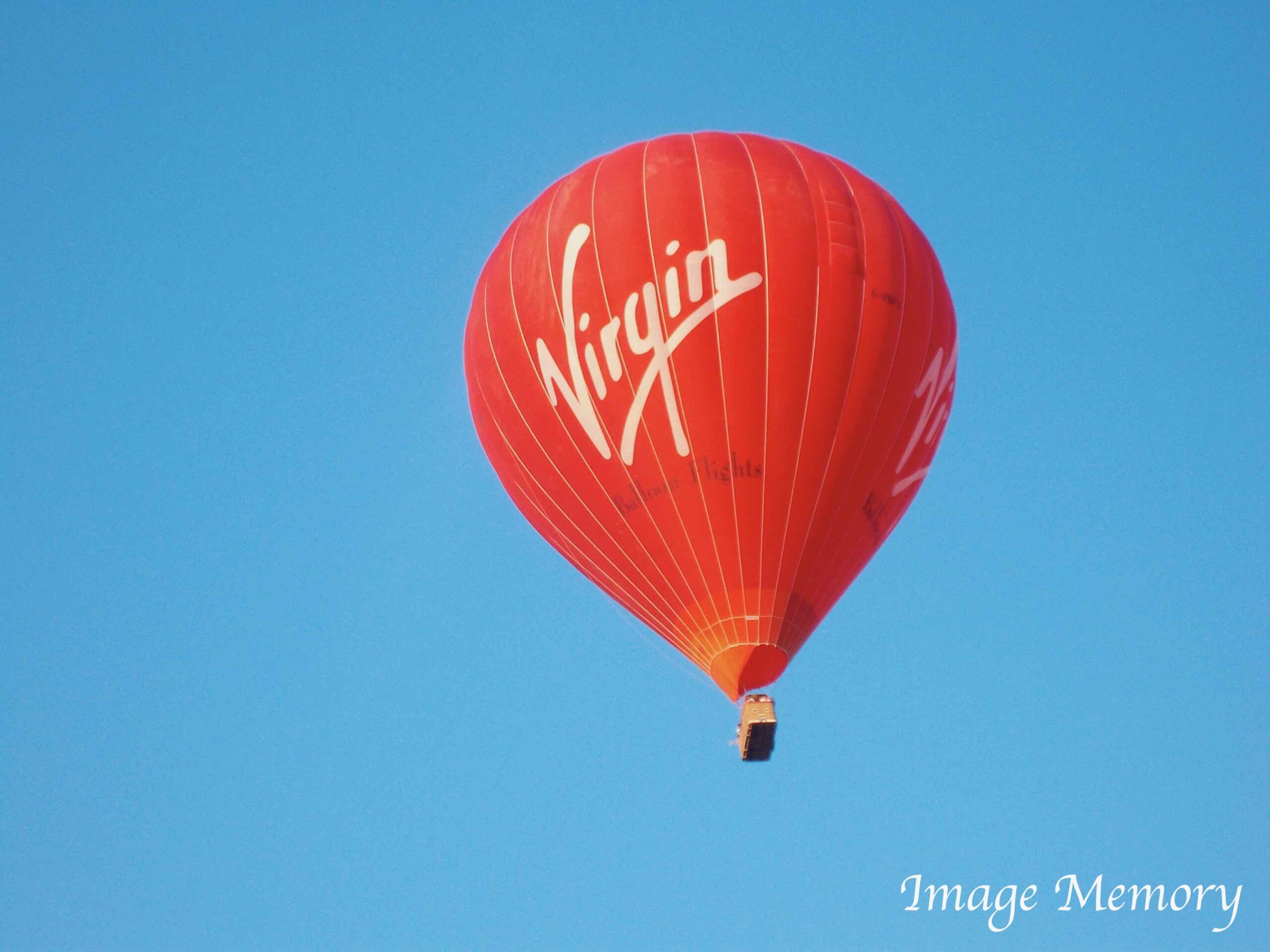
The adverts that depict father Christmas delivering CocaCola are memorable, as are the Virgin Atlantic reels encouraging individuality.

Next week in the Psychology of Colour series – YELLOW


Turner and the Elements – Earth

Castle Ruins and Small Village Landscape, Joseph Mallord William Turner, c. 1798-1799

Joseph Turners work can be viewed at:

https://www.tate.org.uk/visit/tate-britain/display/jmw-turner

Mountains, Crags and Rocks

“Roughness forms the most essential part of difference between the beautiful and the picturesque”  William Gilpin (1724-1804).

In the second half of the eighteenth century, the English clergyman and author William Gilpin formulated an aesthetic theory of landscape.  This was published in 1786.

Opinions of landscape design formed a “picturesque” debate.  Lancelot “Capability” Brown and Humphrey Repton represented one side of the spectrum.  They were in contrast to the ideas of William Gilpin and Richard Payne.

Landscapes by Brown and Repton are characterised by undulating expanses of grass and hills, broken up by clumps of trees and serpentine lakes to impress serenity.  This style required dramatic landscape alterations; an endless number of trees would be cut down, and an entire village would be relocated in the name of “improvement.”

Gilpin preferred rugged and moody landscapes that could also invoke the sublime. Gilpin observed that the appearance of the landscape changed depending upon the clouds and the quality of light.

Turner’s interest in the element of earth must be looked at in the context of contemporary developments in landscape painting in Britain.

Gilpin published his observations and encouraged British landscape artists to pursue atmospheric phenomena. He illustrated this contention in watercolours that brought the landscape to life through the use of chiaroscuro.

The fine art term chiaroscuro comes from the Italian words that roughly translate to light and dark.  Chiaroscuro technique is employed in the visual arts to represent light and shadow as they define three-dimensional objects.  Turner followed Gilpin’s example in exploring British landscapes.

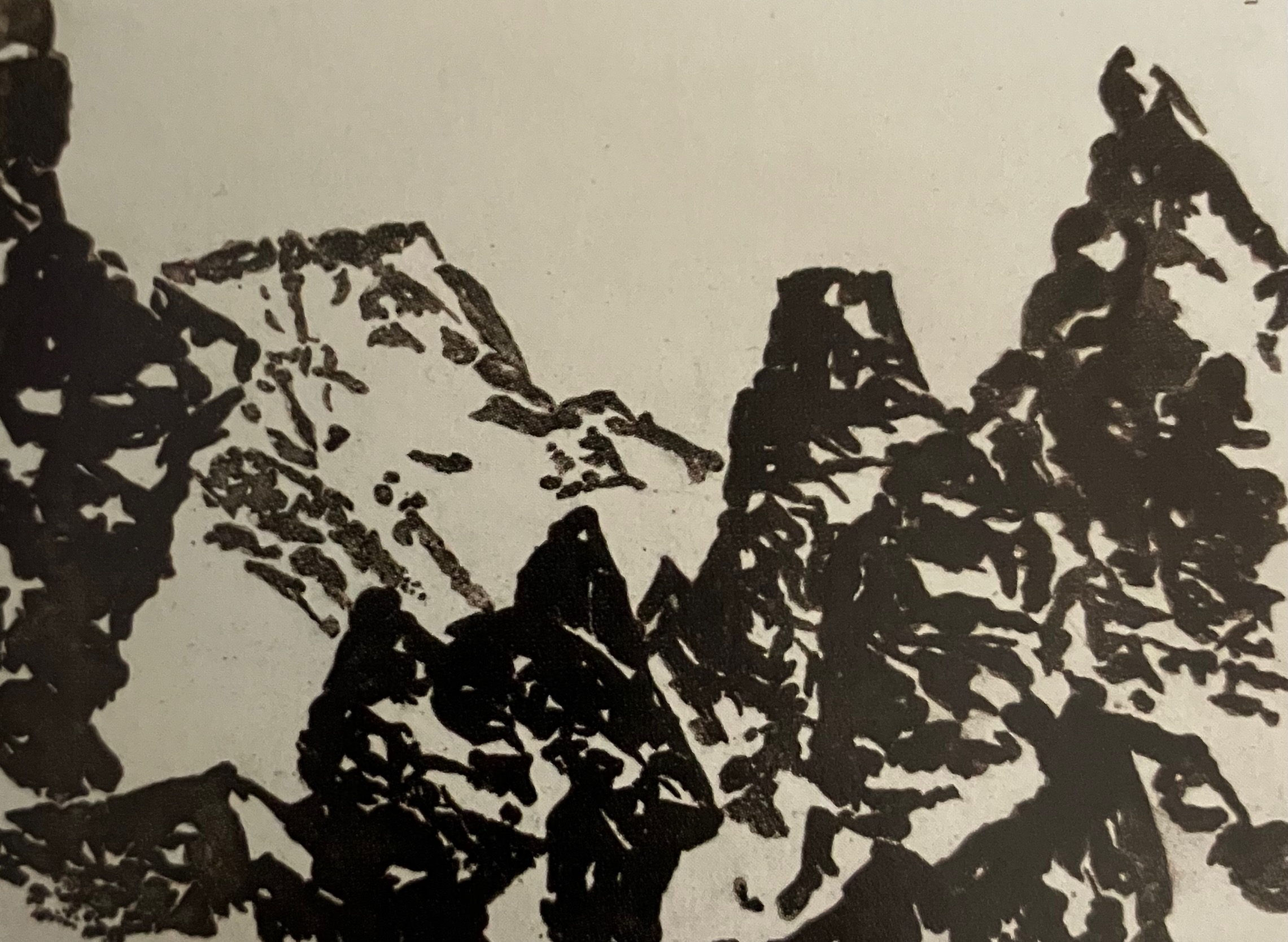
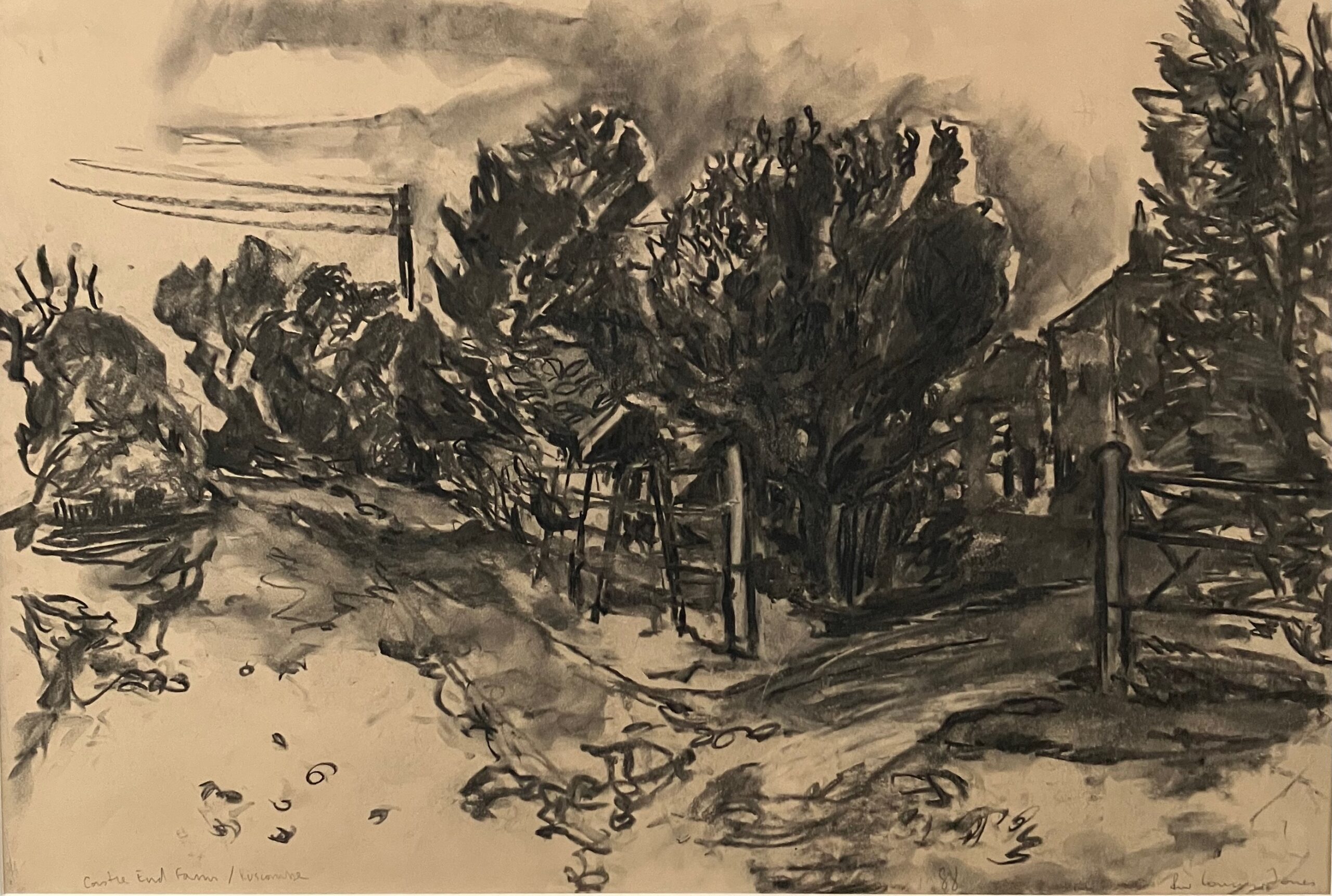
Here are some ‘monochromatic’ samples of the chiaroscuro method:

Mountain Peaks, Alexander Cozens, c. 1785

Alexander Cozens work can be viewed at https://www.tate.org.uk/art/artists/alexander-cozens-118 

Castle End Farm, Luscombe, Richard William Conway-Jones, 1988

Richard is a contemporary artist, his work can be viewed at:

http://www.conway-jones.co.uk

From a personal perspective, my approach to photography has been, as much as is possible, that of an artist.

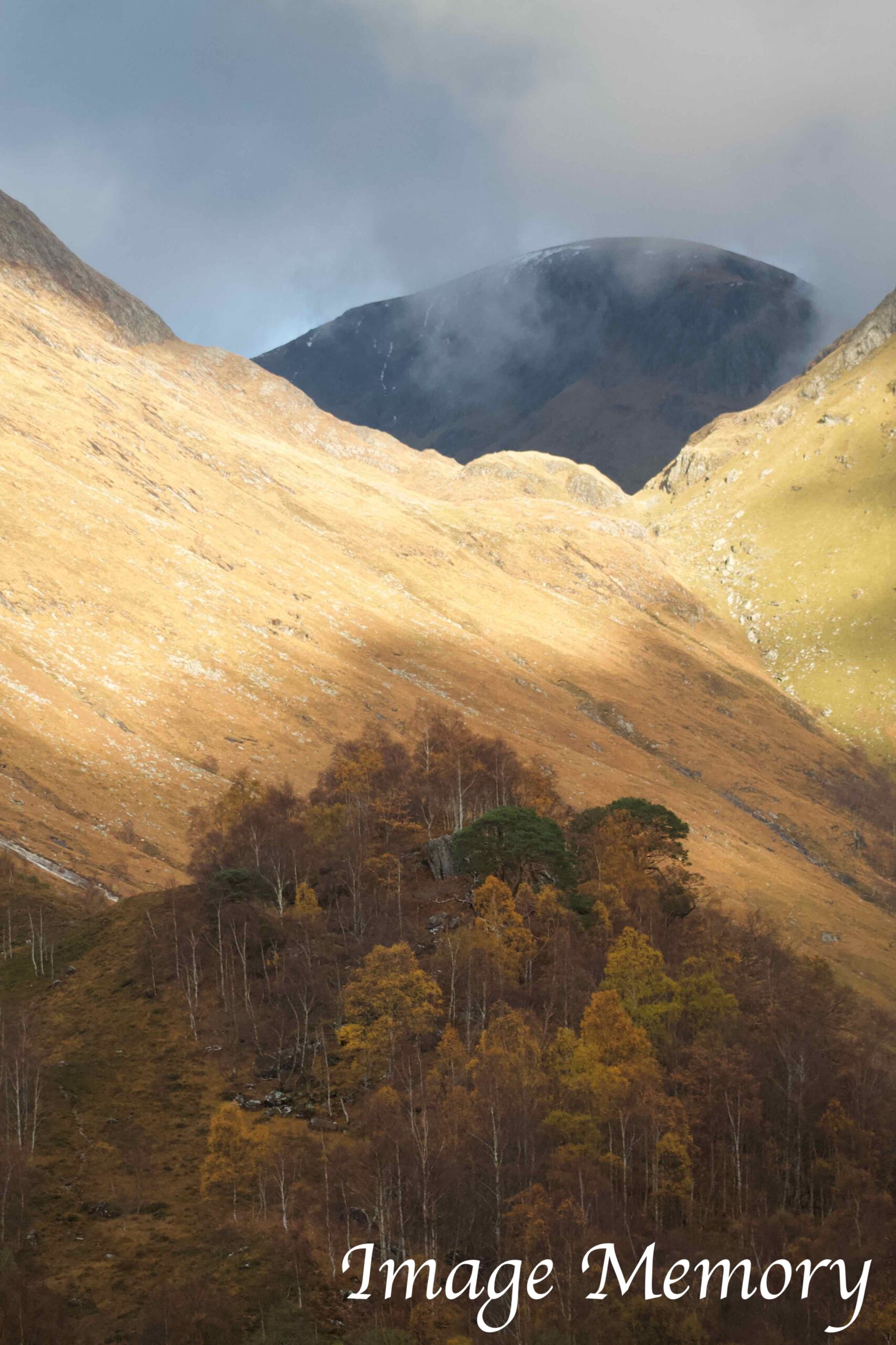
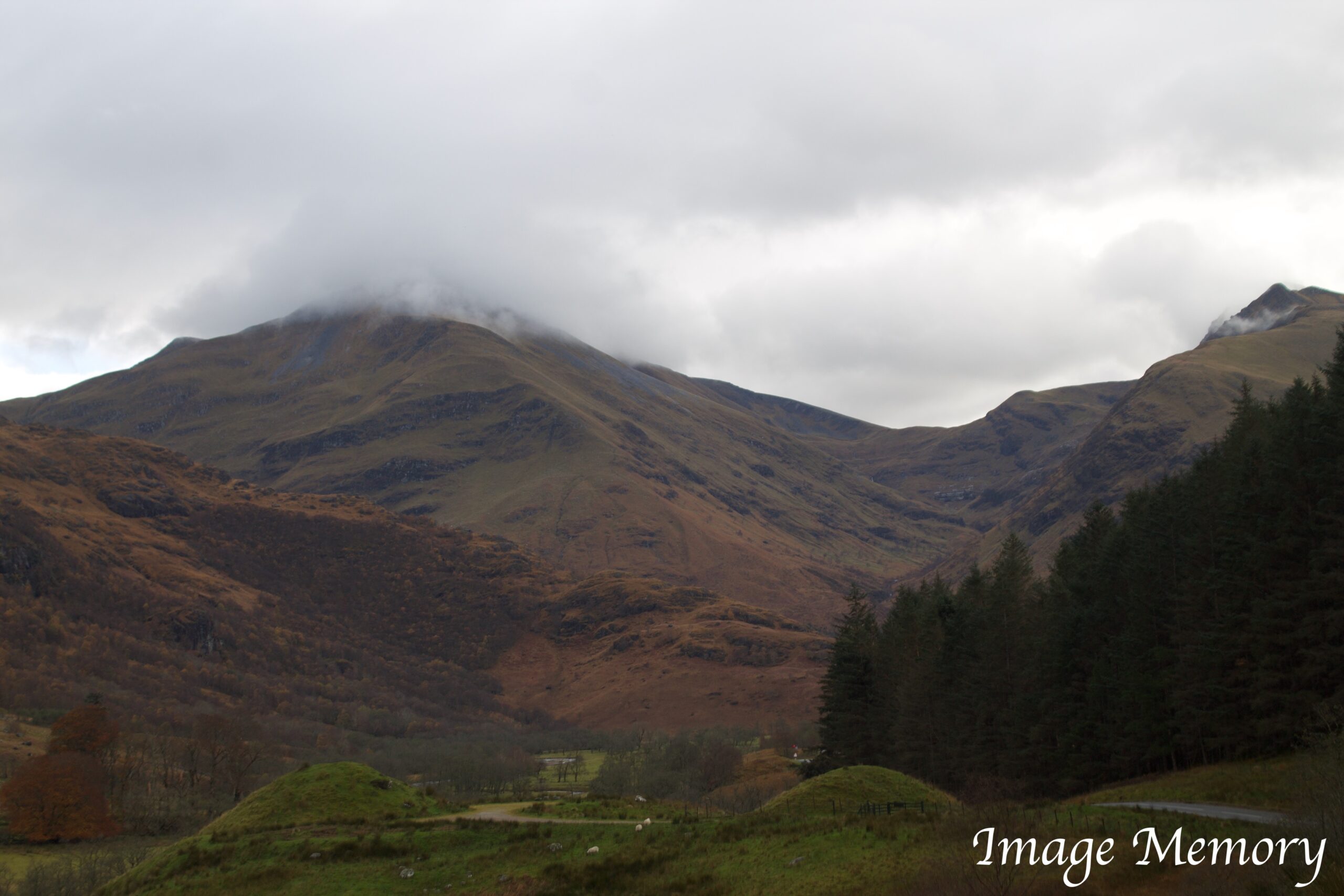
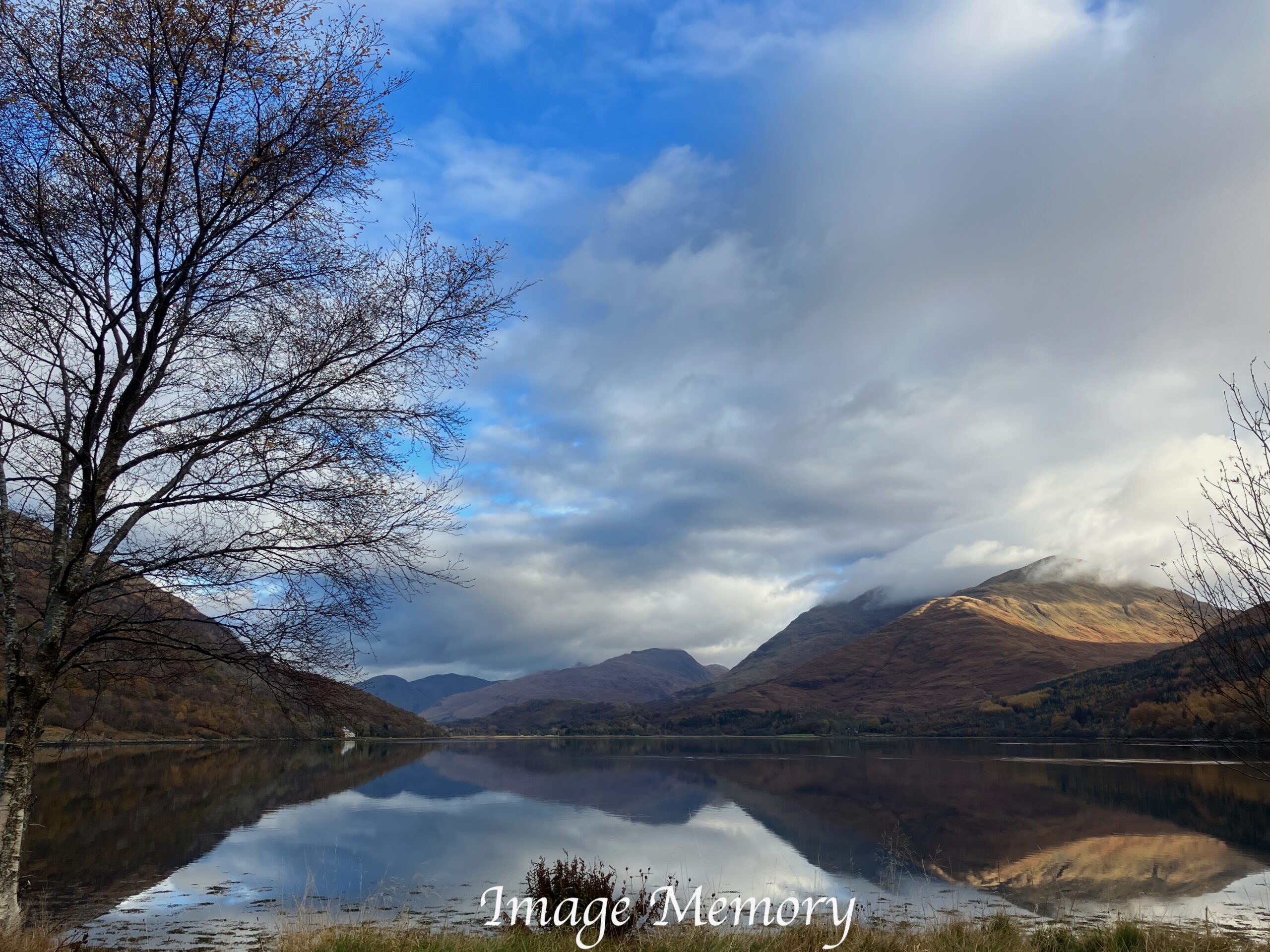
I feel drawn to the mountains of Wales, Scotland and the Lake District. This Scottish landscape photo below shows trees growing where God and nature has decided. The picturesque stark mountains that reach the sky are easier to capture when the light is less intense.  I hope you can appreciate Gilpin’s ‘atmospheric phenomena’.

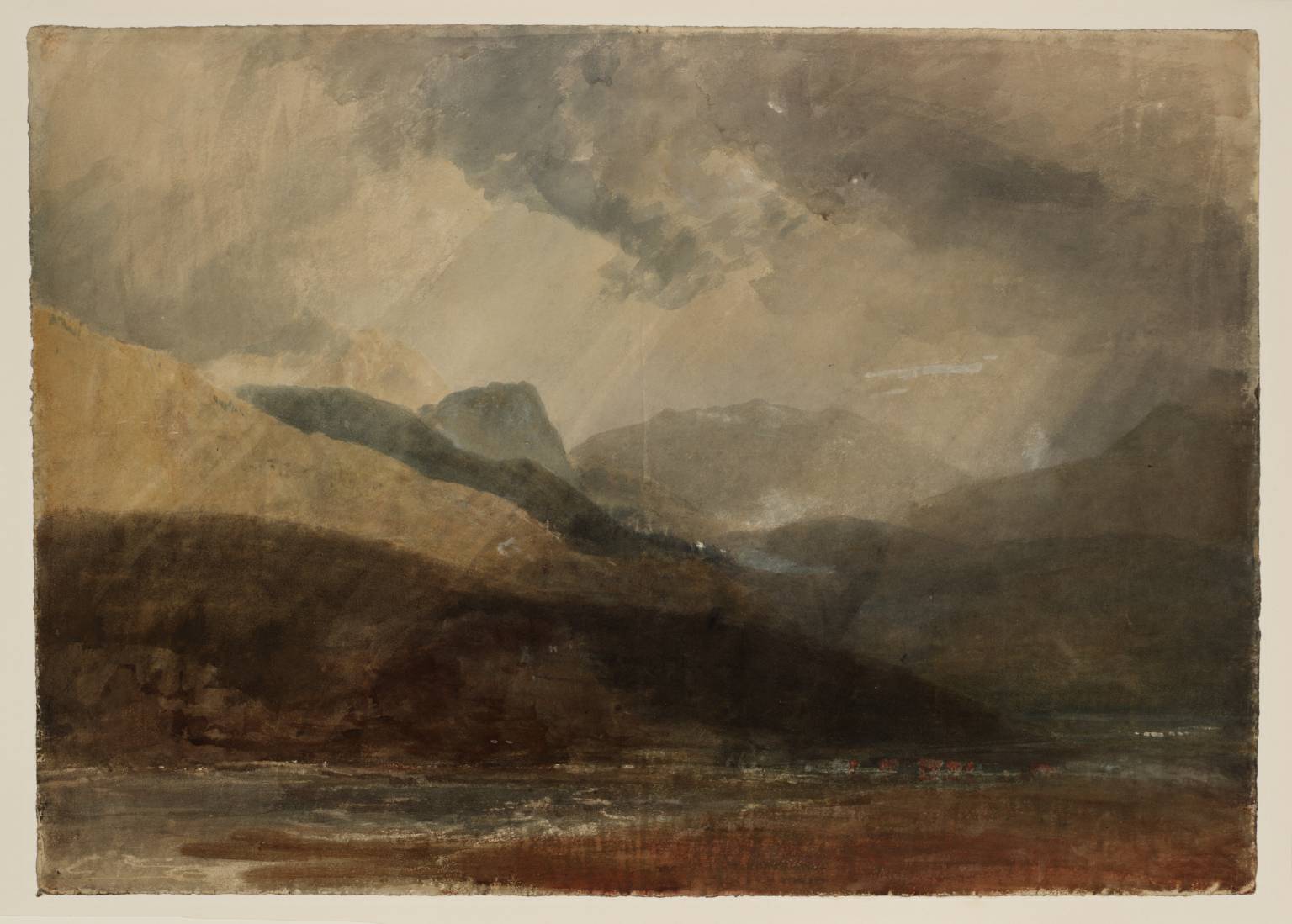
Blair Atholl, Looking towards Killiecrankie circa 1801 Joseph Mallord William Turner 1775-1851 Accepted by the nation as part of the Turner Bequest 1856 http://www.tate.org.uk/art/work/D04179

Glen Nevis, Hugo Richardson, November 2023

Scottish Landscape, Hugo Richardson, November 2023

I like mountains as a subject for photographic landscapes.  I have experimented with light and shadow options and seasonal light intensity variations can have an effect on the mood of the image.

Clearly, where the outline of mountains meet the sky, having a ‘chiaroscuro’ methodology in the mind of the photographer, can help.

Through the value gradation of colour and the analytical division of bright and shadowed shapes, the chiaroscuro artists create the illusions of three-dimensional forms and the light coming from a specific source, often achieving dramatic effects.

By 1801, the twenty-six-year-old Turner was already an Associate of the Royal Academy.

Turner was at the centre of intellectual life.  The Academy was at the right-hand side of Somerset House, next to the Society of Antiquaries.

Sir Francis Chantrey (sculptor),  Sir John Soane (architect)  and Sir Thomas Lawrence (painter) were fellows of the Royal Society.

The Academicians attended lectures on the most complex discoveries in science and it was suggested Turner was an invited guest.

Sir William Herschel (1738-1822) presented papers on the nature of the sun.

Herschel had looked at the sun with a giant telescope in Slough.  He found a range of particular features that he called “openings, shallows, ridges, nodules, corrugations, indentations and pores”.

He filtered the harmful magnified light through a tray of watered ink.

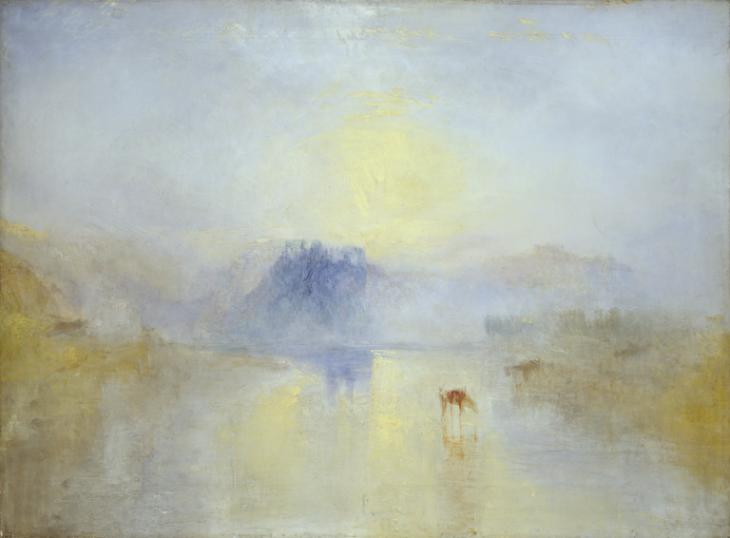
Turner too looked at the sun and purposefully gives a dab of the brush bristles, raising nodules of paint; a wipe of the flat areas of paint making parallel ridges and a smoothed area.

Norham Castle, Sunrise c.1845 Joseph Mallord William Turner 1775-1851 Accepted by the nation as part of the Turner Bequest 1856 http://www.tate.org.uk/art/work/N01981

Capturing photographic images of the sun is best left till the sun is rising or setting. I took this photo in 2016. When the image was downloaded from the ‘SIM card’, a spotlight from the sky appeared to light up a small area of the ground. This image has not been adjusted, to this day I do not know how the photo is possible!

Landscape Sunset Near Pewsey, Hugo Richardson, November 2016