To Bee or not to Bee
We are told that insects were created by God on the fifth day (see Genesis in the bible).
Clearly, Genesis’s account of creation is open to interpretation. The six days of creation are not twenty-four hour days but much longer periods, likely to be thousands to billions of years.
Bees evolved from ancient predatory wasps that lived 120 million years ago (please click on: Museum of the Earth).
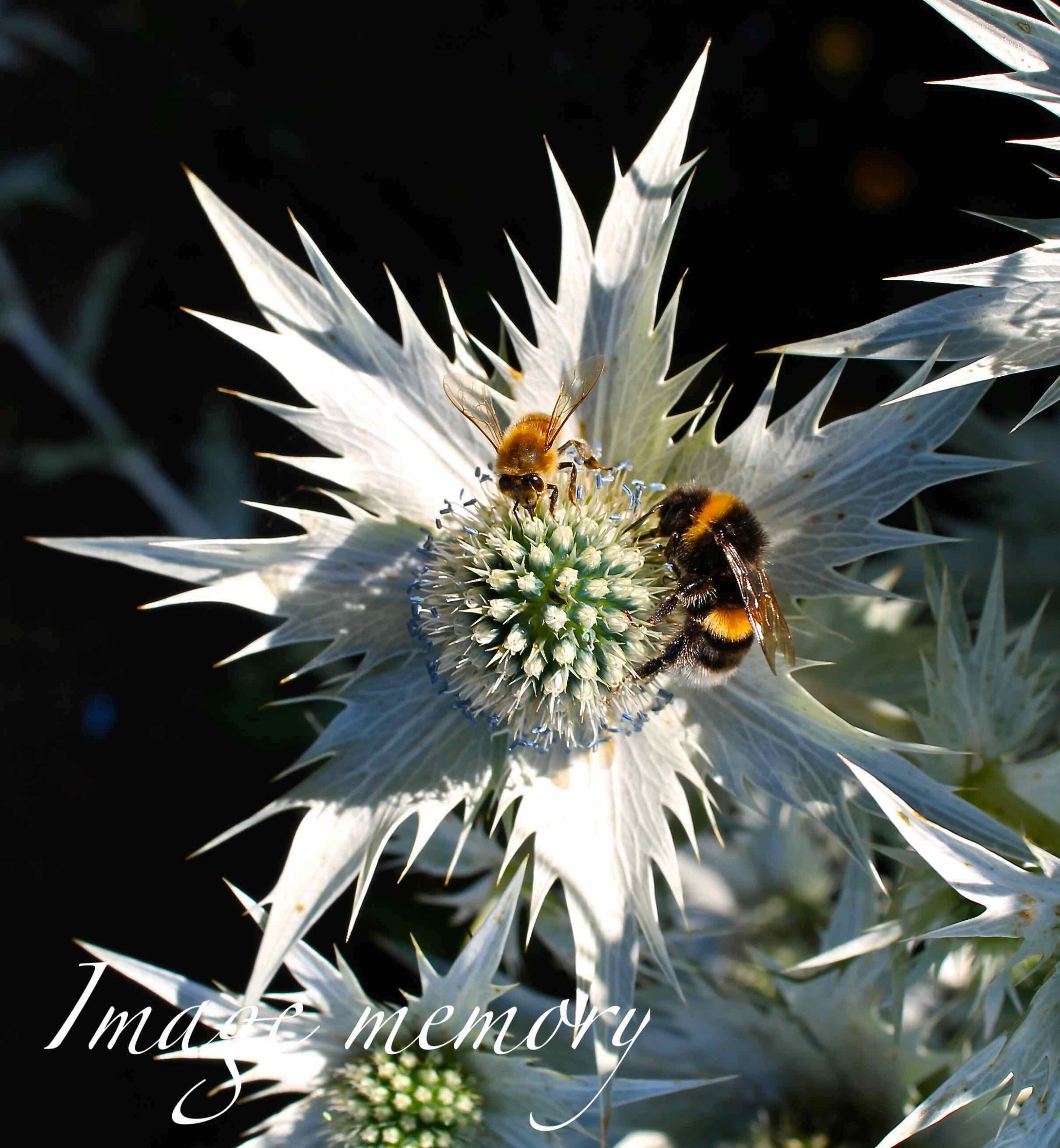
Bees are attracted to the flower’s bright colours, patterns on the petals and the aroma of sweet nectar. However, what is fascinating is the fact that discoveries from 1960s onwards show they are attracted by an electrical charge. (please click on: “Bees can sense the electrical field of flowers“) .?Flowers are negatively charged and bees are positively charged. Please see photo below showing bees feeding on eryngium giganteum or ‘Miss Willmott’s ghost’.
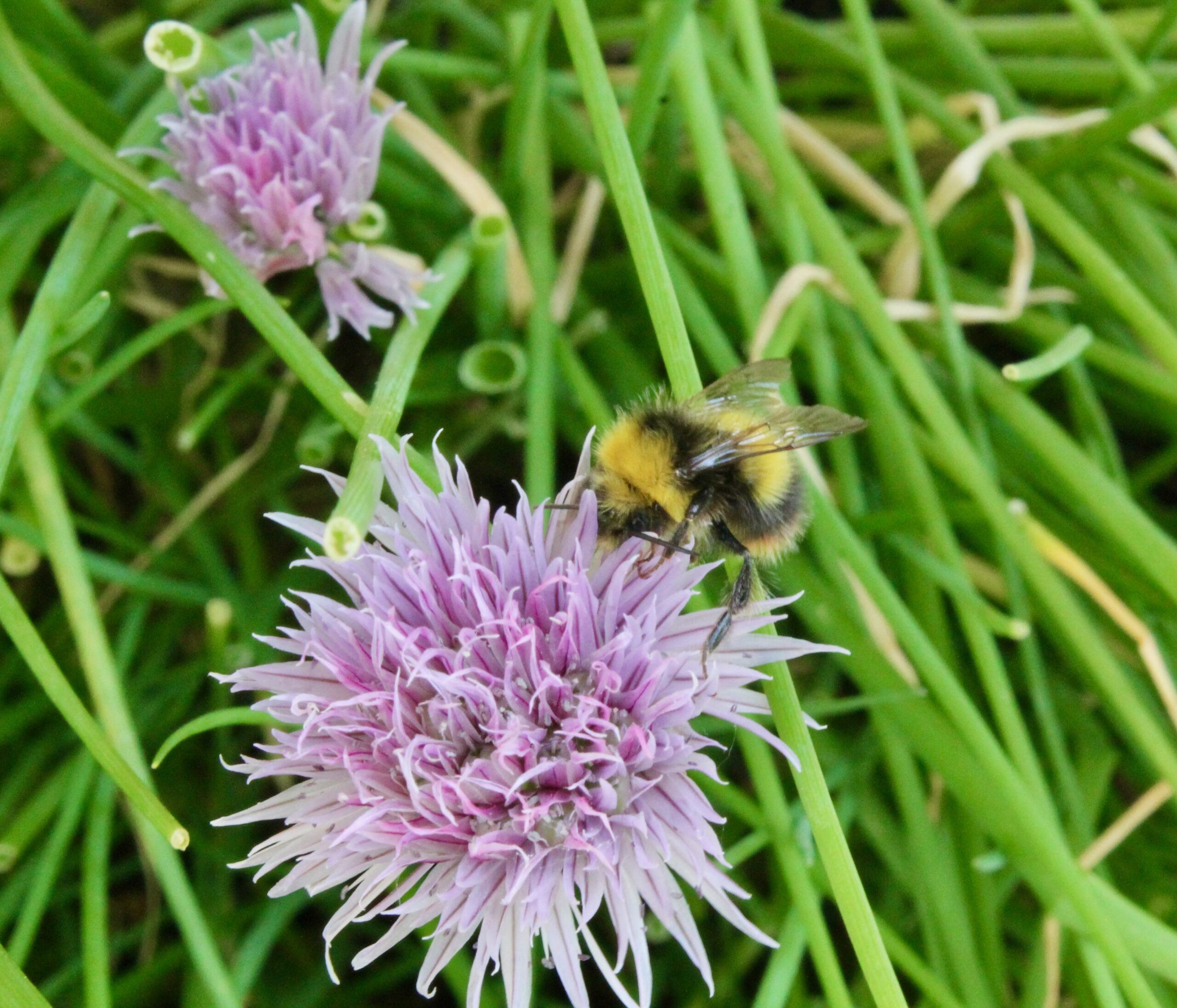
Bee on Chive flower
The electrical charges between the flower and the bees mean that the pollen can be seen to jump to the bees body, says Daniel Robert of the University of Bristol (please click on: University of Bristol).
In order to further interpret the electrical signals that bees are sensitive to, electrodes can be attached to the stems of flowers. These electrodes can be attached to speakers and the electrical pulse can be heard. This sound changes when the bee approaches as the bee has a different electrical signal. David Attenborough describes this intricately in the following video: Electric Charge on Flowers and Bees.
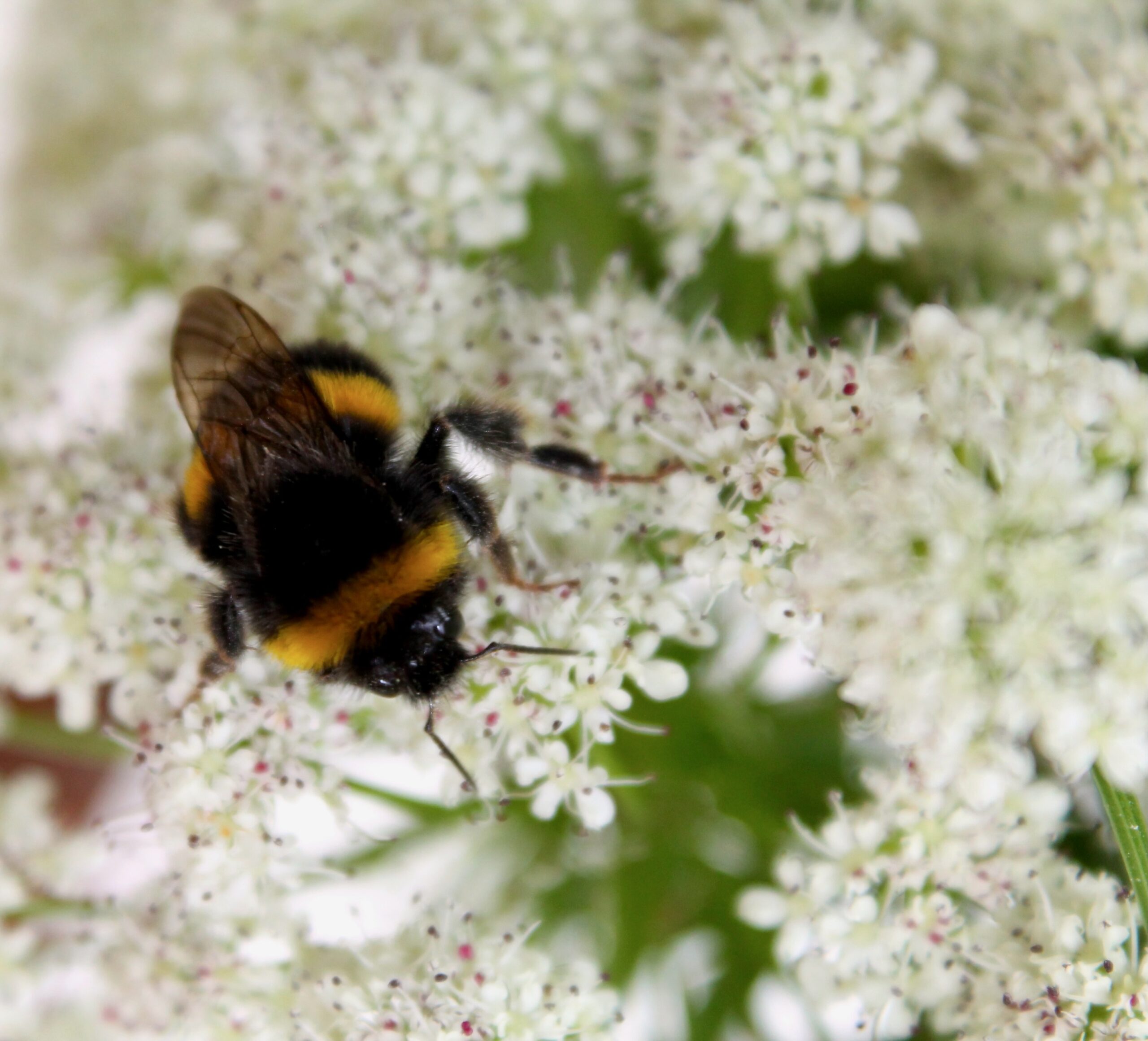
Bee on Cow Parsley
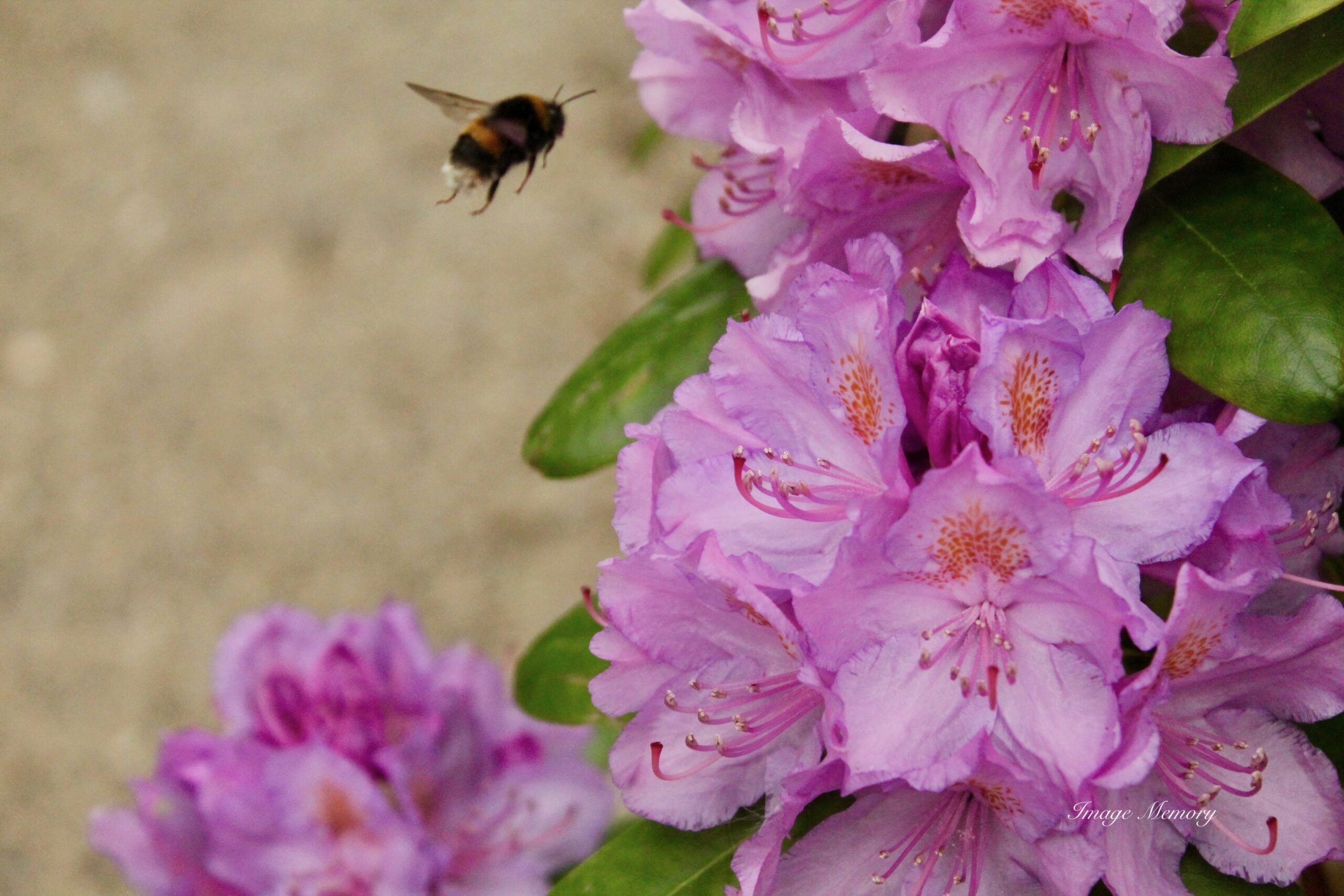
Bee flying towards a rhododendron bush